
Monday, April 25, 2016
I’ve Moved!
Hello blog readers! After a period of inactivity, I’ve revived my blog at the slightly modified address of blog.claygardner.com. Please update your links and subscriptions. Thank you!

Monday, April 21, 2014
Happy Birthday, Game Boy!
Today marks the 25th anniversary of the venerable Game Boy console. Despite its pokey processor and unbacklit monochrome screen, I'll always remember the time I spent with it fondly. Whether I was climbing a mysterious tower in search of a fabled paradise in Final Fantasy Legend or tossing a pokeball at Mewtwo in Pokémon, the Game Boy always felt like a console that embraced its limitations instead of being bound by them.
So here's to you, Game Boy! I'll play a few 8-bit soundtracks on loop in your honor. I also made this info graphic—my first—to celebrate the occasion. For such an antiquated piece of technology, the Game Boy sure had staying power!

So here's to you, Game Boy! I'll play a few 8-bit soundtracks on loop in your honor. I also made this info graphic—my first—to celebrate the occasion. For such an antiquated piece of technology, the Game Boy sure had staying power!
By the way, if anyone's curious what font Nintendo used for the Game Boy logo, it's Gill Sans. I also used a font called Early Gameboy for the pixelly parts.
Thursday, November 21, 2013
Kickstarter Roundup 11-21-13

Where-in I pick through Kickstarter for the projects that most catch my fancy.
Bubblegum Crisis Ultimate Edition Blu-Ray Set
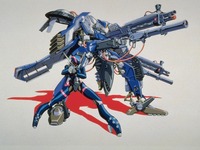 WHAT IT IS: A definitive Blu-Ray release of the classic cyberpunk anime.
WHY YOU SHOULD CARE: Come on, it's Bubblegum Crisis. On Blu-Ray. Do you really need a reason? Okay, okay...Bubblegum Crisis was one of the first unedited, subtitled anime releases in North America, making for a watershed moment and a title a lot of tried and true anime fans are nostalgic for. It's also being released by the original licensee, and your backing dollar supports a smaller company putting out high-quality releases.
WHAT YOU SHOULD GET: $50 Basic. The physical Blu-Ray disc, postcards, commemorative coin, and involvement in the design process of the Blu-Ray itself.
RELEVANT LINKS: @animeigo | www.animeigo.com | Facebook Page
Hana Doki Kira

WHY YOU SHOULD CARE: There's a lot to like here, great artwork, the promise of great shoujo tales...but I'll be honest. What sold me is the brilliant use of the seafoam spot color. (Even the project page is adorned in nothing but head-to-toe.) Two-tone printing seems to be a lost art form as full-color has become ubiquitous, but you can do some really special things with it and use shades that simply aren't reproducible in CMYK.
WHAT YOU SHOULD GET: $25 Doki Doki Deluxe Pre-Order. The book, the PDF, and a set of postcards. Higher pledges feature sketches, commissions, tote bags, and other premiums that might strike your fancy.
RELEVANT LINKS: Tumblr | Facebook
Sega Mega Drive/Genesis: Collected Works
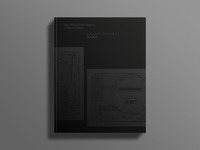
WHY YOU SHOULD CARE: First off. The cover. Just look at it. That's a glorious cover, is it not? But this project is more than a pretty face. Exclusive interviews with a veritable who's-who of Sega's 16-bit history, myriad production images of both the console and classic games, 300 pages of cover-to-cover nostalgia awesome, and did I mention how amazing that cover looks?
WHAT YOU SHOULD GET: £30 (roughly $48) The Book. A physical copy of the book and your name immortalized in its pages. No blue hedgehog included unless you go for the $400 hyper-limited edition.
RELEVANT LINKS: @romalerts | www.readonlymemory.vg
Board Games That Tell Stories
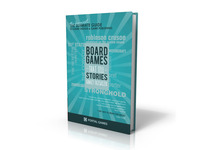
WHY YOU SHOULD CARE: It's not often you can get material written about game design (or tabletop games in general) packaged in a nice hardcover. When it's written by the designer of many great board games, like Neuroshima Hex, it's even better. Admittedly, the text suffers a bit from English being Trzewiczek's second language, but there's still loads of insight and fun humor here. And the cover looks nice.
WHAT YOU SHOULD GET: $26 Hardcover. Nets you a signed hardcover version of the book. But if you poke around the add-ons you can get one of Trzewiczek's great games.
RELEVANT LINKS: http://www.BoardGamesThatTellStories.com/
Friday, October 11, 2013
Kickstarter Roundup 10-11-13
Where-in I pick through Kickstarter for the projects that most catch my fancy.
Hyper Light Drifter
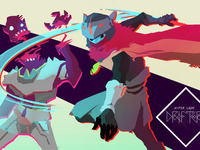
WHY YOU SHOULD CARE: People's fondness for pixelated gaming is not a secret, and it seems any indie effort is as likely to sport blocky graphics as it is "HD." Those jagged edges invoke feelings of nostalgia for the games of yesteryear, and in many cases go a long way in demonstrating what kind of game you are about to play. But sometimes a game is more than that, a real statement of beauty like Sword & Sworcery was. Hyper Light Drifter is one of those games.
WHAT YOU SHOULD GET: $40. Digital versions of the game, manual, soundtrack, and artbook. You also get some other digital bonuses (like a new "sprite.") and a second key for the game, so you can actually take advantage of all those additional platforms from the stretch goals.
RELEVANT LINKS: @HeartMachineZ | www.heart-machine.com | Facebook Page
Akiba Anime Art Magazine

WHY YOU SHOULD CARE: Japan is putting its foot into the Kickstarter ring with successful projects like Little Witch Academia and the enormously popular Mighty No. 9. By continuing to support Japanese efforts, that means we'll get to see even more of it! Besides, Akiba is a book full of lovely Japanese art, printed with a special wide gamut process that results in much brighter images than with traditional CMYK.
WHAT YOU SHOULD GET: $18 Otaku. A copy of the magazine and all of the various stretch goals that have accrued over the campaign.
RELEVANT LINKS: jhlab.jp
Game Cave Vol. 1
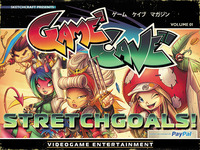
WHY YOU SHOULD CARE: One of the big things I really miss about magazines is the design of them. When you view an article online, you get all the text, all the photos, and even video clips you never could have back then, but never the lovingly defined spreads, crammed to the gills with artwork, screenshots exploding from detailed backgrounds, and maybe a line of crooked text or two. It's nice to see that again.
WHAT YOU SHOULD GET: $30 Physical Book Tier. A physical copy of the magazine—I mean come on, that's the whole point, right?—plus an art print and all the digital goods.
RELEVANT LINKS: @sketchcraft | www.sketchcraft.com | Facebook
Dawning Star: Fate of Eos
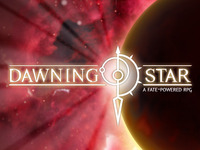
WHY YOU SHOULD CARE: FATE is a great system, as can be attested by its modestly successful Kickstarter. So if you want to take the game to task in a far-flung future of aliens and spaceships, then Dawning Star is a good place to find it. With a flexible setting that can be tailored from pulp to space opera to interstellar intrigue with ease, and a healthy fanbase from previous editions, it's hard to go wrong.
WHAT YOU SHOULD GET: $35 EOS Defense Force. A physical copy of the game and all the digital goodies.
RELEVANT LINKS: @DawningStarRPG | www.dawningstar.com | Facebook
Destiny Fails Us

WHY YOU SHOULD CARE: While the game's use of 3D anime-style models isn't as nice as traditionally rendered art, the look serves its needs, and what you have is a fun-looking take on the date-sim. I'm especially fond of your character's cellphone that you actually check for messages throughout the game.
WHAT YOU SHOULD GET: $10 Digital Download Pack. A download copy of the game and the usual digital extras.
RELEVANT LINKS: www.destinyfailsus.com | Facebook
Friday, September 27, 2013
Kickstarter Roundup 09-27-13
Where-in I pick through Kickstarter for the projects that most catch my fancy.
Battle Merchants
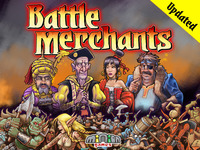
WHY YOU SHOULD CARE: I love Euro games. I think the entire movement is bringing validity to tabletop gaming with its well-honed mechanics and involving gameplay. But let's be honest; a great deal of them have rather dry themes about this Pacific isle or that historical era—or some combination of the two. But Battle Merchants, with its colorful art and explicit fantasy themes of elves, dwarves, orcs, and hobgoblins, is a fun take on money-management.
WHAT YOU SHOULD GET: $48-58 Battle Master. This gets you a copy of the game at almost $10 off retail. But if you really like the art, there’s several pledges offering the artist’s original sketches that are pretty neat!
RELEVANT LINKS: @MinionGames | www.miniongames.com | Minion Games on Facebook
Mighty No. 9
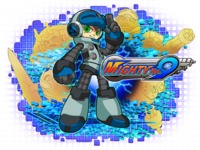
WHY YOU SHOULD CARE: With Capcom disappointing fans by repeatedly leaving poor Mega Man by the wayside in recent years, Mighty No. 9 is both an indulgent return-to-form and an excuse to revitalize the age-old Mega Man formula with some fresh ideas. Well, some fresh ideas...the fact that main characters Beck, Call, and Dr. White are about as dissimilar from Rock, Roll, and Dr. Light as a rock and a stone isn't lost on me.
WHAT YOU SHOULD GET: $60. Your name in the credits (and an OFFICIAL MIGHTY NUMBER), A copy of the game, its soundtrack, plus a retro-inspired physical gamebox and manual. Higher tiers include an artbook/strategy guide and various get your ______ in the game rewards, as well as dinner with the man Keiji Inafune.
RELEVANT LINKS: @MightyNo9 | Mighty No. 9 Facebook
Shantae: Half-Genie Hero
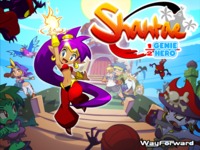
WHY YOU SHOULD CARE: Way Forward mostly does contract work for various companies and their licenses, but when they manage to save enough, the work they do for themselves tends to be pretty special. Mighty Switch Force, Sigma Star Saga, and of course Shantae prove an excellent pedigree for gaming. Now with Kickstarter, we won't have to wait another decade for a proper sequel.
WHAT YOU SHOULD GET: $75 STANDARD EDITION. Your name in the credits, a copy of the game, a physical version of the soundtrack, and various digital bonuses like an artbook and an extra transformation for Shantae. Higher levels include a hardcover artbook, your face/art in the game, invitation to a wrap-party, and a rather high-priced package including the original (very rare) Shantae for Gameboy Color.
RELEVANT LINKS: @wayforward | www.wayforward.com
Atama-ii: Multiple Path Stories in Easy English
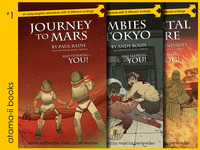
WHY YOU SHOULD CARE: Because CYOA are awesome, especially for your favorite young-reader. And while the reading level of these books is very easy, the content is not trite or boring, with tales of trips to mars, life as an immortal across the milennia, or—yes—zombies…in Tokyo! With great illustrations and a writing staff partially culled from previous CYOA efforts, it looks like a great try at reviving this unique brand of storytelling.
WHAT YOU SHOULD GET: $20…or do you choose another pledge level? Turn to page 12! Includes all 10 eBooks in iBook or Kindle format. Higher levels include signed prints, limited edition hardcover copies, cameos, or even the power to direct your own book in the series.
RELEVANT LINKS: www.atama-ii.com
Wednesday, September 18, 2013
Kickstarter Roundup 09-18-13
Since I spend way too much time browsing Kickstarter anyway, I've decided to share a weekly (semi-weekly?) roundup of notable finds on the world's biggest crowdfunding site.
Belle of the Ball
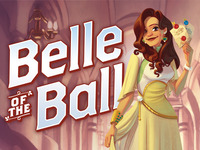
WHY YOU SHOULD CARE: With Daniel Solis as both Game Designer and Graphic Designer for the project, you know it’s a game that will play as good as it looks. He also designs all his games “in the open” on his blog, so it’s nice to support a designer who shares so much for free. (And I do mean so much, I swear Daniel tilts his head a little too far and game ideas come pouring out…possibly from his hair, though this is a mystery.)
WHAT YOU SHOULD GET: $25 House Party. The Belle of the Ball Kickstarter is light on exclusive extras, so there’s not a lot to choose from besides a copy of the game. Still, if you’re interested in reprints of some of Dice Hate Me’s (the publisher for the BotB) other offerings, there’s plenty of higher tiers that will oblige your interest.
RELEVANT LINKS: @DanielSolis | www.danielsolis.com, @DiceHatMe | www.dicehatemegames.com
Calcula’s LVL UP!
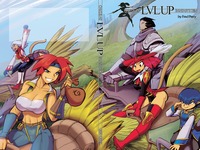
WHY YOU SHOULD CARE: If you’re a fan of the artist’s previous works, like Gold Digger, then you probably don’t need any convincing. But LVL Up itself is a charming comic with a lot of heart, and any fan of Final Fantasy XI should get quite a few smiles out of it. Perry will not be publishing the book through normal distribution channels, so this will be your only chance to get your greedy Galka gloves on a print copy.
WHAT YOU SHOULD GET: $50 LVL THREE Support. The doujin signed and with a sketch of the eponymous Calcula on the dust jacket. Can you say no to Calcula? Can you?
RELEVANT LINKS: www.gd-tangent.com
Icebound: A Visual Novel

WHY YOU SHOULD CARE: Visual novels can’t seem to get a fair shake in the American market, and Kickstarter hasn’t been much kinder (unless you count Megatokyo…). Somewhere between text adventure and novel, VNs imbue good stories with just enough visuals, music, and choices to make them fun to play. Icebound features beautiful backdrops, a nice premise, and a few mini-game bells and whistles to break up the walls of text that are the trademark of the genre. It’s as good an entry as any to what can be a really compelling medium for storytelling, and the more people aware of visual novels, the better.
WHAT YOU SHOULD GET: $25 Citizen. A copy of the game, the soundtrack, some wallpapers, and your name in the credits.
RELEVANT LINKS: @vnwriter | www.fastermind.net
Pixel Star - 01
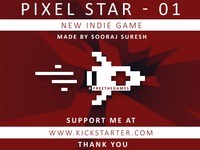
WHY YOU SHOULD CARE: While there’s nothing about the mechanics or aesthetics you probably haven’t seen before—especially if you have as much of a penchant for exploring such things on iOS as I do—the Jetpack Joyride meets Space Invaders: Infinity Gene 8-bit beat fest that is Pixel Star - 01 offers a competent-looking take on the casual retro game with a compelling design sense, all by a 16-year-old aspiring programmer.
WHAT YOU SHOULD GET: $5 PC, Mac, iOS, or Android version. The pledge list is unfortunately a muddled collection of different packages, with each not being terribly clear of what it offers, but $5 gets you the game and supports a kid making his dreams come true.
Sunday, September 15, 2013
Kickstarting Kickstarter

Those of you who follow this blog (or my twitter account) are probably aware I recently ran a Kickstarter for my anime-inspired role-playing game, OVA. My experience with crowd-funding only bolsters my belief that we are on the verge of a real paradigm shift in how we create our content, interact with our supporters, and make things happen.
But Kickstarter isn't a magical push button for success. It’s a lot of work—I’m working on content to send to my backers as I write this—and for all the ways Kickstarter makes things easier, there are pitfalls that are just as easy to fall into. While I only have one project so far, I have been an active part of Kickstarters for Minion Games, Jolly Roger Games, Asmadi Games, and maybe a few other companies that end in "Games," and I’ve gotten to know my way around the most popular crowd-funding platform. It seems only fair to share some of the things I’ve learned along the way. Looking to start a project of your own? Read on, Macduff.
You may have read a few articles about Kickstarter to prepare yourself for the task ahead. Maybe you’ve read a lot of them. Apparently, you’re reading at least one—this one—and that’s good! The fact you’re not jumping into your first project believing it an autonomous money-making machine is certainly a proper first step. You may think the next one involves planning your pledge levels, writing your pitch, or setting up your marketing engine. But my first and most important piece of advice actually has nothing to do with your project at all.
BACK A PROJECT (OR THREE)
Before setting off on this adventure, it’s imperative that you actually try it out for yourself. While any project will do, finding a few somewhat similar to your own would be most ideal. You should back a project because no amount of research will teach you more about how Kickstarter works.You understand your backers because you are a backer. You see firsthand what excites you in a project, what bores you, what annoys you. You understand what makes you want to pledge and at what levels. You get a feel for the kind and number of updates that neither feel too pushy or too sparse. You realize the questions you want answered by the project creators.
You understand Kickstarter because you see the process firsthand. You experience the ebb and flow of the campaign, the aftermath, the surveys, the private message system. You see inventive ways people modify the Kickstarter ecosystem with add-ons and stretch goals. You experience how Kickstarter notifies you throughout the campaign.
You instill confidence in your potential backers because you have been one of them. You show you believe in this whole crowd-funding thing, that you’re not just dropping in for an “easy” paycheck. People do care, and I’ve received several messages from people who greatly appreciated that I gave to a lot of other projects before I launched my own.
And come on, you get cool stuff. Why wouldn’t you?
PEOPLE JUDGE A BOOK BY ITS COVER
Despite the age-old axiom imploring you to do the opposite, people can and will judge your project by the face you put forward. It’s not only what catches (and hopefully holds) their attention, it’s an indication of what the finished product will be.Now I know you’re launching a Kickstarter to make money, but you have to show that you’re making the effort, too. If you throw up a project that hasn't had a cent put into it, your campaign will look like a panhandle instead of your personal dream. Take the time. Save the money. Make sure you have a compelling and eye-catching thumbnail. Show at least one example of your final product, whether it's an interior spread, a fan of cards, or even just a selection of illustrations. Everything doesn't have to be polished, and don't feel you can't show prototype or in-progress items. But make sure your backers know exactly how great a product they will be getting when they back.
Your video is another matter of great importance. And by that I don’t mean you have to have a video. It helps, of course, but if your options are a great thumbnail and no video, or a video that is painful and annoying to sit through, you are much better off with no trailer at all.
I'm not saying you have to go blow your budget hiring James Cameron. While a really awesome video will certainly help, you can do just fine with less. The important thing is to never look careless. Don't upload a handheld selfie you took amid the din of the commuter car while heading to work. Don't ramble on for ten minutes about your project without direction or forethought. Make sure your product appears in the video, preferably upfront. If you aren't able to edit the video in a way to show off your art, assets, and components digitally, have a convincing prototype built and film it in lighting where it’s easily visible. If you have trouble speaking clearly or charismatically, consider hiring a voiceover.
REDUCE YOUR BARRIER TO ENTRY
People are busy, and they may be cramming their Kickstarter browsing in between all matters of multitasking. Don’t make it difficult to throw money at you. Limit the number of pledge levels as much as possible to eliminate backing confusion and paralysis. Detail what each of them include in the body of your project, with images if possible. Pitch the crux of what makes your project special early on in your video and on your page, not after a detailed history of your toils. If you can, offer a demo, quick-start, or print & play version of your game so potential backers can weigh first hand if the project is one they want to back.There’s also one more barrier to entry to consider, and it’s an easy one to forget. “Why should I back now?” If you don’t give compelling answer to this, whether through exclusive content or cool bonuses, a lot of your fans will just buy your product when it’s available later...and after distributors, storefronts, and others have taken a substantial slice out of your profits.
DON'T SET YOUR GOAL TOO HIGH
Kickstarter is as much powered by psychology as it is by the content it purveys. The entire experience, from the personal appeal to help achieve dreams, to the limited window to support a project and receive its rewards, to even the Trivial Pursuit-esque backed project wheel, plays on human nature to maximize the desire to give money now instead of buying a given thing later.With all that working in your favor, you very much don’t want to shoot yourself in the foot by setting your goal too high. When you’re sitting on a campaign that’s half over and not anywhere close to its goal, it becomes an intense disincentive to backers. If it’s not going to fund anyway, why bother? Don’t underestimate how powerful this impression can be. I’ve seen time and time again great projects fail miserably because they set their goal too high, only to relaunch with a more modest target and make exponentially more money than their goal the first time!
So how high is too high? Projects differ so widely that what works for your five pound box of miniatures is not appropriate for your lightweight RPG. Just take a look at similar projects and see what seems to be a typical successful baseline. My personal rule of thumb is to cover your production and fulfillment costs, but leave out (at least a good portion of) your art and design budget. In other words, the stuff that hasn’t happened at the time of your Kickstarter. Of course, the minimum needs to be whatever you can afford to finish off the project, so this advice may not be appropriate. But as I mentioned earlier, you should try to cover some of your costs yourself, as a show of good faith and belief in your own project, if nothing else.
YOU CAN'T LET KICKSTARTER DO ALL THE WORK
Finally, just remember this is still your project, and you have to put in the time, too. Looking at OVA's stats, only 50% of the money pledged came directly from Kickstarter’s ecosystem. The rest was through my own efforts with social media, word of mouth, and the contacts I have built over time. But hey, that’s pretty empowering that Kickstarter can double your efforts, right? It’s a great time to make things, so go out there and do it!
Subscribe to:
Posts (Atom)