Showing posts with label board games. Show all posts

Thursday, November 21, 2013

Kickstarter Roundup 11-21-13


Where-in I pick through Kickstarter for the projects that most catch my fancy.


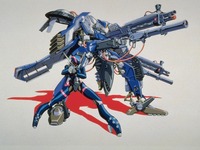
Bubblegum Crisis Ultimate Edition Blu-Ray Set

http://www.kickstarter.com/projects/madoverlord/bubblegum-crisis-ultimate-edition-blu-ray-setWHAT IT IS: A definitive Blu-Ray release of the classic cyberpunk anime.

WHY YOU SHOULD CARE: Come on, it's Bubblegum Crisis. On Blu-Ray. Do you really need a reason? Okay, okay...Bubblegum Crisis was one of the first unedited, subtitled anime releases in North America, making for a watershed moment and a title a lot of tried and true anime fans are nostalgic for. It's also being released by the original licensee, and your backing dollar supports a smaller company putting out high-quality releases.

WHAT YOU SHOULD GET: $50 Basic. The physical Blu-Ray disc, postcards, commemorative coin, and involvement in the design process of the Blu-Ray itself.

RELEVANT LINKS: @animeigo | www.animeigo.com | Facebook Page


Hana Doki Kira

http://www.kickstarter.com/projects/1191994790/hana-doki-kira
WHAT IT IS: A shoujo-inspired comic/illustration anthology lovingly designed and printed.

WHY YOU SHOULD CARE: There's a lot to like here, great artwork, the promise of great shoujo tales...but I'll be honest. What sold me is the brilliant use of the seafoam spot color. (Even the project page is adorned in nothing but head-to-toe.) Two-tone printing seems to be a lost art form as full-color has become ubiquitous, but you can do some really special things with it and use shades that simply aren't reproducible in CMYK. 

WHAT YOU SHOULD GET: $25 Doki Doki Deluxe Pre-Order. The book, the PDF, and a set of postcards. Higher pledges feature sketches, commissions, tote bags, and other premiums that might strike your fancy.

RELEVANT LINKS: Tumblr | Facebook


Sega Mega Drive/Genesis: Collected Works

http://www.kickstarter.com/projects/darrenwall/sega-mega-drive-genesis-collected-works
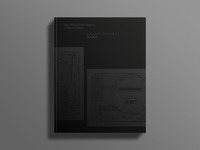
WHAT IT IS: An incredible retrospective of an incredible console. SEEEE-GAAA!

WHY YOU SHOULD CARE: First off. The cover. Just look at it. That's a glorious cover, is it not? But this project is more than a pretty face. Exclusive interviews with a veritable who's-who of Sega's 16-bit history, myriad production images of both the console and classic games, 300 pages of cover-to-cover nostalgia awesome, and did I mention how amazing that cover looks?

WHAT YOU SHOULD GET: £30 (roughly $48) The Book. A physical copy of the book and your name immortalized in its pages. No blue hedgehog included unless you go for the $400 hyper-limited edition.

RELEVANT LINKS:  @romalerts | www.readonlymemory.vg


Board Games That Tell Stories

http://www.kickstarter.com/projects/ludicreations/boardgames-that-tell-stories-by-ignacy-trzewiczek
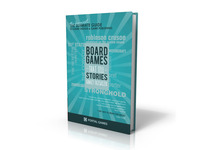
WHAT IT IS: A collection of 35 fan-favorite articles from the game blog of the same name.

WHY YOU SHOULD CARE: It's not often you can get material written about game design (or tabletop games in general) packaged in a nice hardcover. When it's written by the designer of many great board games, like Neuroshima Hex, it's even better. Admittedly, the text suffers a bit from English being Trzewiczek's second language, but there's still loads of insight and fun humor here. And the cover looks nice.

WHAT YOU SHOULD GET: $26 Hardcover. Nets you a signed hardcover version of the book. But if you poke around the add-ons you can get one of Trzewiczek's great games.

RELEVANT LINKS: http://www.BoardGamesThatTellStories.com/

Friday, September 27, 2013

Kickstarter Roundup 09-27-13


Where-in I pick through Kickstarter for the projects that most catch my fancy.


Battle Merchants

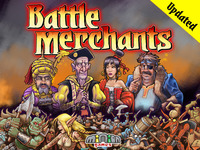
WHAT IT IS: A board game of weapon-selling economics set in a distant fantasy land. Where others see war and turmoil, you see profits, profits, profits!

WHY YOU SHOULD CARE: I love Euro games. I think the entire movement is bringing validity to tabletop gaming with its well-honed mechanics and involving gameplay. But let's be honest; a great deal of them have rather dry themes about this Pacific isle or that historical era—or some combination of the two. But Battle Merchants, with its colorful art and explicit fantasy themes of elves, dwarves, orcs, and hobgoblins, is a fun take on money-management.

WHAT YOU SHOULD GET: $48-58 Battle Master. This gets you a copy of the game at almost $10 off retail. But if you really like the art, there’s several pledges offering the artist’s original sketches that are pretty neat!

RELEVANT LINKS: @MinionGames | www.miniongames.com | Minion Games on Facebook

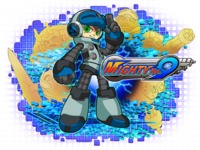
Mighty No. 9

WHAT IT IS: It's Mega Man by the creator of Mega Man with many of the developmental talents of past Mega Mans...but it's not Mega Man.

WHY YOU SHOULD CARE: With Capcom disappointing fans by repeatedly leaving poor Mega Man by the wayside in recent years, Mighty No. 9 is both an indulgent return-to-form and an excuse to revitalize the age-old Mega Man formula with some fresh ideas. Well, some fresh ideas...the fact that main characters Beck, Call, and Dr. White are about as dissimilar from Rock, Roll, and Dr. Light as a rock and a stone isn't lost on me.

WHAT YOU SHOULD GET: $60. Your name in the credits (and an OFFICIAL MIGHTY NUMBER), A copy of the game, its soundtrack, plus a retro-inspired physical gamebox and manual. Higher tiers include an artbook/strategy guide and various get your ______ in the game rewards, as well as dinner with the man Keiji Inafune.

RELEVANT LINKS: @MightyNo9 | Mighty No. 9 Facebook

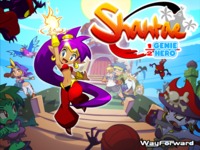
Shantae: Half-Genie Hero

WHAT IT IS: A new HD sequel to the well-loved Shantae series, featuring a brand-new style on top of classic bellydancing, hair-whipping action.

WHY YOU SHOULD CARE: Way Forward mostly does contract work for various companies and their licenses, but when they manage to save enough, the work they do for themselves tends to be pretty special. Mighty Switch Force, Sigma Star Saga, and of course Shantae prove an excellent pedigree for gaming. Now with Kickstarter, we won't have to wait another decade for a proper sequel.

WHAT YOU SHOULD GET: $75 STANDARD EDITION. Your name in the credits, a copy of the game, a physical version of the soundtrack, and various digital bonuses like an artbook and an extra transformation for Shantae. Higher levels include a hardcover artbook, your face/art in the game, invitation to a wrap-party, and a rather high-priced package including the original (very rare) Shantae for Gameboy Color.

RELEVANT LINKS:  @wayforward | www.wayforward.com

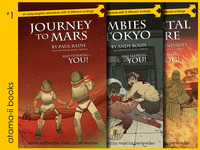
Atama-ii: Multiple Path Stories in Easy English

WHAT IT IS: A new take on the Choose-Your-Own-Adventure series as full-color illustrated eBooks.

WHY YOU SHOULD CARE: Because CYOA are awesome, especially for your favorite young-reader. And while the reading level of these books is very easy, the content is not trite or boring, with tales of trips to mars, life as an immortal across the milennia, or—yes—zombies…in Tokyo! With great illustrations and a writing staff partially culled from previous CYOA efforts, it looks like a great try at reviving this unique brand of storytelling.

WHAT YOU SHOULD GET:  $20…or do you choose another pledge level? Turn to page 12! Includes all 10 eBooks in iBook or Kindle format. Higher levels include signed prints, limited edition hardcover copies, cameos, or even the power to direct your own book in the series.

RELEVANT LINKS:  www.atama-ii.com

Wednesday, September 18, 2013

Kickstarter Roundup 09-18-13


Since I spend way too much time browsing Kickstarter anyway, I've decided to share a weekly (semi-weekly?) roundup of notable finds on the world's biggest crowdfunding site.


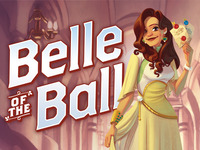
Belle of the Ball

WHAT IT IS: A card game where players become party hosts, each trying their best to put on the most talked-about get-together by carefully managing the guests they invite…or snub.

WHY YOU SHOULD CARE: With Daniel Solis as both Game Designer and Graphic Designer for the project, you know it’s a game that will play as good as it looks. He also designs all his games “in the open” on his blog, so it’s nice to support a designer who shares so much for free. (And I do mean so much, I swear Daniel tilts his head a little too far and game ideas come pouring out…possibly from his hair, though this is a mystery.)

WHAT YOU SHOULD GET: $25 House Party. The Belle of the Ball Kickstarter is light on exclusive extras, so there’s not a lot to choose from besides a copy of the game. Still, if you’re interested in reprints of some of Dice Hate Me’s (the publisher for the BotB) other offerings, there’s plenty of higher tiers that will oblige your interest.

RELEVANT LINKS: @DanielSolis | www.danielsolis.com, @DiceHatMe | www.dicehatemegames.com

Calcula’s LVL UP!

WHAT IT IS: A collected volume of Fred Perry’s online Final Fantasy XI “doujin” comic, LVL UP!

WHY YOU SHOULD CARE: If you’re a fan of the artist’s previous works, like Gold Digger, then you probably don’t need any convincing. But LVL Up itself is a charming comic with a lot of heart, and any fan of Final Fantasy XI should get quite a few smiles out of it. Perry will not be publishing the book through normal distribution channels, so this will be your only chance to get your greedy Galka gloves on a print copy.

WHAT YOU SHOULD GET: $50 LVL THREE Support. The doujin signed and with a sketch of the eponymous Calcula on the dust jacket. Can you say no to Calcula? Can you?

RELEVANT LINKS: www.gd-tangent.com

Icebound: A Visual Novel

WHAT IT IS: A visual novel set in a steampunk/dark-fantasy world in a frozen age.

WHY YOU SHOULD CARE: Visual novels can’t seem to get a fair shake in the American market, and Kickstarter hasn’t been much kinder (unless you count Megatokyo…). Somewhere between text adventure and novel, VNs imbue good stories with just enough visuals, music, and choices to make them fun to play. Icebound features beautiful backdrops, a nice premise, and a few mini-game bells and whistles to break up the walls of text that are the trademark of the genre. It’s as good an entry as any to what can be a really compelling medium for storytelling, and the more people aware of visual novels, the better.

WHAT YOU SHOULD GET: $25 Citizen. A copy of the game, the soundtrack, some wallpapers, and your name in the credits.

RELEVANT LINKS:  @vnwriter | www.fastermind.net

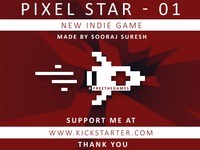
Pixel Star - 01

WHAT IT IS: A retro-inspired space-shooter with groovy 8-bit tunes and aesthetics

WHY YOU SHOULD CARE: While there’s nothing about the mechanics or aesthetics you probably haven’t seen before—especially if you have as much of a penchant for exploring such things on iOS as I do—the Jetpack Joyride meets Space Invaders: Infinity Gene 8-bit beat fest that is Pixel Star - 01 offers a competent-looking take on the casual retro game with a compelling design sense, all by a 16-year-old aspiring programmer.

WHAT YOU SHOULD GET:  $5 PC, Mac, iOS, or Android version. The pledge list is unfortunately a muddled collection of different packages, with each not being terribly clear of what it offers, but $5 gets you the game and supports a kid making his dreams come true.

Monday, August 27, 2012

Somebody Set Up Us the Bomb

MINION MONDAY
 
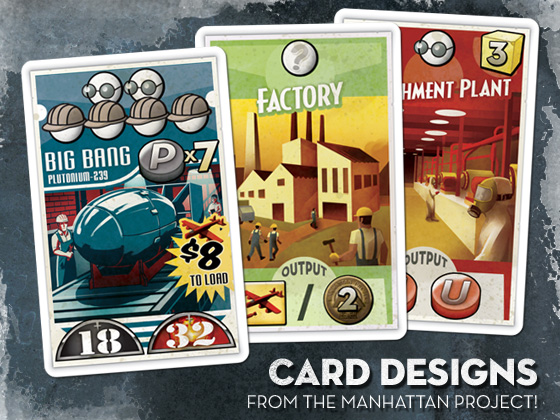
Of all the games I’ve worked on for Minion Games, The Manhattan Project was by far the largest undertaking. There were plenty of cards, boards, tokens, and funny little men to fashion for sure, but more than that, capturing the zeitgeist of World War II era propaganda and aesthetics was a deeply involving process. Instead of purely abstract spaces, The Manhattan Project is full of papers and posters, cards and envelopes, flyers and ephemera of a bygone day. Not only the design of these had to be right, but I wanted them to look old, like this box was a relic found stowed in the recesses of an attic.

CLICK TO BLOW UP
James Mathe, Minion Games whipcracker and all-around nice guy, was a stalwart ally in this cause. Throughout the process, he was always quick with an old 50s newspaper ad, vintage sales receipt, or a clever idea. Really, I can’t express enough it's worth your time to research materials in the theme you want to recreate! As much as you think you know a given look, there's nothing like a small period detail that can make a design sing.

The game’s main board was the bulk of the work. Since I wanted to convey a messy engineer’s desk, each element had to have its own design. I’m not fond of repurposing other’s stock images, so most everything had to be painted from scratch, from the weathered plastic frame of the cork board to the dingy ash tray that serves as the game’s “Bribe Pile.”

While the idea of a mess of papers was fun, I still wanted each piece to make logical sense. The spy track as film on a top secret file folder, the factories on an inventory receipt, and the university diploma all reinforce the idea of the what a given space you can place your hard-working workers is for.

For the cards, I wanted to reference the propaganda posters that are so defining of the time period. Bold but limited palettes, period fonts, and a good coat of wear and tear fleshed out the look. Instead of the standard white or black border, I placed the key elements on an actual poster shape, complete with tattered edges and a shadow to give that poorly pasted on effect.

FontBook, an iPad app I mentioned in a previous entry, was a great resource for font selection, with its ability to sort typefaces by the year they were created. Exploring these mid century fonts was a real joy.

The original Manhattan Project sold through its print run almost immediately on release, but fret not! Minion Games has launched a new Kickstarter. Not only can you get the original game, but a “Mega Expansion,” containing new bombs, buildings, nations, rockets, and famous people of the era, is up for grabs. You can even get this T-Shirt I designed exclusive to project backers!

Monday, May 14, 2012

A God at Sea

MINION MONDAY
 
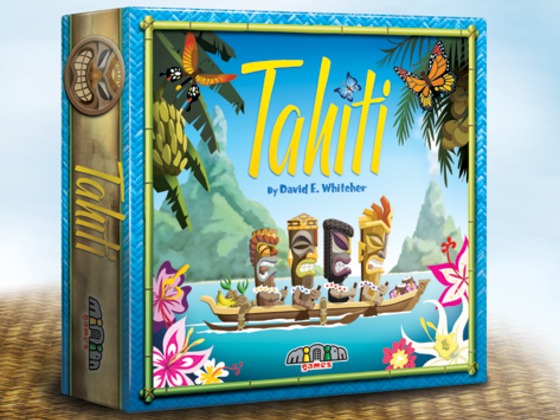
It’s time for another Minion Monday, and this time I’m going to show you Minion Games’ latest, Tahiti!

Yeah, yeah. Those of you well-versed in Euro-style board games will have seen countless iterations of the “manage some goods at an oceanic locale that also serves as the game’s name” schtick. But where theme often exists as a last-minute coat of paint, Tahiti fully avails itself of the lore surrounding its namesake island. The Tiki aesthetic throughout the game’s art and design is fun right out of the box, before you so much as place so much as a tile on the table. Little touches, like actually piloting a little canoe from island to island as you pick up and deliver goods, makes the specific Pacific choice of setting much more than an arbitrary skinning of the mechanics.

Minion Games once again teamed up with Chuck Whelon for the artwork. As he had for his work on Nile, Chuck really researched the source material for an authentic experience. Well...authentic to the Tiki aesthetic anyway, which like so many things has been host to a bevy of Western exaggerations and extrapolations. Still, any Tiki-head will be well at home at this gaming archipelago.

As we did for Kingdom of Solomon, Venture Forth, and The Manhattan Project, Minion Games is using crowd funding site Kickstarter to help offset costs and drum up interest in Tahiti. But those games were Kickstarted relatively early in their production cycles, with images and videos revealing great games sporting less-than-great prototype graphics. This time, I convinced James that we might have better success showing off a nearly complete product, one with care taken to present it in the best light. So a lot of my work this time around has been specifically for the Kickstarter effort: Custom text headers, fully-realized prototypes, and of course the box shot gracing the very top of the page.

Has it helped? It’s a bit too early to tell, but so far support has been great! The pledges over the first two days have been the best yet for Minion Games. If you would like to secure your own copy of Tahiti, get in your canoe and go! And if you’re at all like me and love to see unique premiums tied to a project, I designed a bag in conjunction with Dragon Chow only available to higher backers. It’s perfect for pulling out the games’ wooden cubes or nestling whatever you desire in Tiki goodness.

Not sure yet? When you back at the $1 level, you immediately receive a copy of the Print & Play version. If you like what you see, you can upgrade to any of the other great tiers, including a dinner with James Mathe — the perfect opportunity to pick his brain about the board game industry!

If nothing else, drop by for the video. Watching James juggle copies of our last two waves of board games is well worth the minute of your time.


 “If game publishing doesnt work out, at least Ill have a career with Ringling!”

Sunday, April 1, 2012

Nyan Cat: Rainbow Race

I’m ecstatic to reveal the box art for Minion Games’ next title. As a subject near and dear to my heart, I’m so excited we were able to procure the license bouncing off the success of the now sold-out Manhattan Project.

Nyan Cat: Rainbow Race is a “real-time” card game for 2-4 players based on the popular internet meme. Instead of taking turns, players can draw, discard, and play cards at any time. The deck consists of 6 colors: red, orange, yellow, green, blue, and purple, which are shuffled and evenly divided among the players to become individual draw decks. When you draw a card, you may either place it in your hand or play it to your play area on the table. Cards played to the table are organized by color, and the goal is to create the biggest stack of a single color. Players may not have multiple stacks of the same color on the table in front of them at any point in the game. When players feels like their stack is big enough, they can take the whole stack and put it in their scoring pile. If a stack of that color already exists in the scoring pile, the new pile must be at least one larger, and the old pile is discarded.

There is also the Nyan Cat card. This special rare card can be played on top of anyone’s color stack, and that stack immediately goes to the Nyan Cat player’s scoring pile. Managing how big to make your color stacks — to maximize score value but hopefully not attract other players' desirous eyes! — is the core of the game.

Once all cards have been played or discarded, scoring is handled in traditional Knizian manner: The player with the most cards in their smallest color stack is the winner!

Once again, I can’t express how enthusiastic I am about this game. I designed it from the ground up with Nyan Cat in mind and to be accessible to younger players. I only hope the gaming public will find I’ve succeeded! Keep checking by in the coming months for updates as Nyan Cat: Rainbow Race goes through production!

Monday, March 26, 2012

Ode to a Grecian Game

MINION MONDAY
 
Greek mythology: A tried and true lore of ancient heroes, incomparable threats, and completely baffling logic that is the mainstay of our educational culture. But even if Zeus was found wanting of aspirin and birthed goddesses from his forehead in the driest way a textbook knew how, there’s still an ancient power to these myths, a strength derived from thousands of storytellers, each imparting a bit of their own life, and a bit of their own imperfections, as the tales found their way to the modern day. This is truer of nothing than the Greek's epic poetry, and no one has captured the rhythm and lifeblood of an ancient people as Robert Fagles.

I still remember his translation of the Iliad, an old hardback tome, perhaps then new, resting on the coffee table. The cover black, the top of the leaves painted red, if not for all those sturdy souls sent to House of Death, then for a really swell looking book. It was my mother’s, and where Mythology 101 might not have had any love for the Greek gods and goddesses of yore, she imparted a fascination with swift-footed Achilles and his unquellable rage, Lord of Men Agamemnon, Hector, Paris, Helen, and all the tragedies of the war on Troy.

Rage— Goddess, sing of the rage of Perseus son Achilles! Lines like this reverberated with me, and it inspired a adoration not just for Greek myth, but of all old epic poetry, from the alliterative Beowolf to the often very redundant Gilgamesh.


But for all its enduring imagery and epic tales, the world of Greek myth feels seldom acknowledged in the world of gaming. Sure, one could dig up that GURPS sourcebook or an aging board game of some nature, but for a mythology ripe with all the tropes we associate with the omnipresent medieval fantasy, it’s a missed opportunity for games both new and familiar.

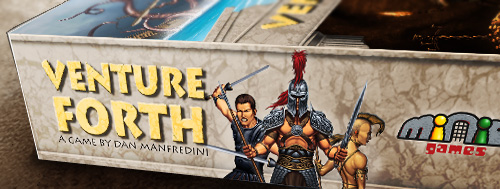
So when Minion Games head honcho James Mathe first showed me Venture Forth, I was pretty enthusiastic. The bones were there for a game rife with the kind of magic I felt reading the epics, and maybe even such irreverent romps as the 1980s Clash of the Titans. But the prototype itself was bare of theme, a blank slate that could as easily been Tolkien as Homer. Time to crack those knuckles!

As I said, the game symbols used in the prototype given to me were all very generic affairs, with medieval chevron shields and golden trophies. I replaced them with Greek equivalents, sturdy round shields, gleaming gladii, and ancient urns. With proper icons in place, it seemed only fitting to use the most iconic of Greek contributions, the architecture of the period, as my inspiration for the card borders.

After completing the frames, I started to place the work by James Denton into my card sheets. The art was big and bold, maybe even a little over-the-top at times, which felt perfect for the sort of Greek high-adventure we were talking about. But inside my frames they felt encroached upon, constrained. One does not contain such gods of men and creatures of myth! It was then I decided to make the artwork “pop over” the edges. It made the monsters more daunting, the heroes more adventuresome, and all in all just seemed more exciting. Unfortunately, most of the artwork was provided without layers, so this effect took quite a bit of love and care. Zooming in at 600% helps as you're carefully trimming the art away from its original background. The end “coming out at you” result was worth the time. The tiny cards feel that much bigger for it.

For the card backs, I decided to make it stand out from the front art by using traditional “black-figure” imagery from Grecian urns. I drew it myself based on a particular urn featuring god of war Ares and surrounded it with the ornamental details that seemed fitting.

Venture Forth itself is a great game that takes the things you love about an adventure board game, leaves out the trite, trying stuff you don’t, and wraps it in a golden fleece of Euro-gaming standbys that together feels fresh and new. Helping your party of adventurers meet their fated ambitions instead of just killing monsters leads to a very Greek feeling tale, and the amount of depth provided by cultivating paths, hiring new heroes, and overcoming obstacles just makes for a very complete and satisfying package.

If that sounds like the kind of game for you, and you lack the ability to pop it fully-formed from your forehead, make Hermes-like haste to MinionGames.com and score yourself a copy. Ordering directly from us means more of your dollar goes to support the people who made the game possible! That, and you'll get this special Treasure Card, not available anywhere else!

Wednesday, March 21, 2012

A Game of the Game of the Generals


I was speaking to a friend, the very talented Honoel, about board games when he brought up Game of the Generals. It was one he remembered fondly from his childhood, and the game was noteworthy for being native to his home in the Philippines. Both players had an army of plastic pieces, each unit labeled with a different rank. Each rank could capture any piece of those ranked under it, except the lowest rank, which could only capture the highest ranked piece in the game. This in itself could be a fun diversion, but the twist lay in that these ranks were only labeled on one side, keeping your troops a complete mystery to your opponent. The goal: protect your flag and capture the enemy’s! The game itself is over 40 years old, but I still managed to find a picture of it.

Okay, yes, as it turns out Game of the Generals is a thinly veiled copy of the classic Stratego. It’s not devoid of differences: The lakes that serve as a choke point are absent, the spy occupies the top rank instead of the bottom, and there are no mines or units to defuse them. The game also explicitly calls for an arbiter to decide conflicts instead of revealing both pieces after a capturing attempt. While the idea of sitting through a game doing nothing but comparing pieces for your friends sounds like a great way to spend an evening, I’d be surprised how often this actually happened. The most interesting change, though, is that your flag can move. Instead of being stuck in the space it started, forcing you to protect it and devise a red herring or two, it can navigate the board like any other unit. Moreover, if you manage to reach the farthest row with your flag, as one would promote a pawn in chess, you win the game. It’s not enough to regard Generals as much more than the Stratego-clone it is, yet I find it an interesting variation just the same.

But as I read about Game of the Generals and Stratego, I discovered there was yet another game that shared many of the same ideas. Luzhanqi, or The Army Game, features a similar hidden army you use to protect your flag and capture your opponent’s own. It even has the arbiter mechanic from Game of the Generals. But unlike Generals, it features enough differences that it can’t be wholly considered a carbon-copy. For one thing, there are numerous special spaces, like railroads that allow units to travel long distances in straight lines, and campsites, where no unit may be attacked. It also uses a series of circles and radials to place and move pieces instead of a square grid, even though the end effect is much the same.
While The Army Game's exact origin is unclear, copies from the 1950s prove that it’s at least a rough contemporary of the original Netherlands Stratego in 1949. (For the record, Stratego didn't reach America until 1961, and Game of the Generals was first released in 1970.)

So who copied who? With The Army Game’s history being so hopelessly obscure, it’s hard to say for sure. That is, if it weren’t for the fact another game predated them both. Lattaque was first published in France in 1910 with rules largely identical to Stratego. But what’s really interesting about Lattaque is that the creator is Mademoiselle Hermance Edan.


Yes, you saw that right. A lady. Creating a war game. In the early 1900s. When you consider how guy-centric the war-game and RPG industries were in the 70s and 80s, it’s a fun footnote that such an early example was designed by the fairer sex. Unfortunately, I could find little about her beyond the same handful of sentences regarding her patent filing in 1908, quoted pretty much everywhere that discusses the origin of Lattaque and Stratego.

So you’d think that would settle it. Lattaque and by extension Stratego came first, with The Army Game being a loose variant.

But if you continue digging, you’ll find that all of these games bear a striking similarity to another Chinese game, Dou Shou Qi. Known in English as Jungle or Animal Chess, it is a game that features the same piece hierarchy (albeit with animals instead of soldier ranks) and even two bodies of water similar to Stratego’s own. However, the identity of the pieces is public knowledge, and there are Den and Trap spaces (where pieces cannot be captured and any piece can capture any piece respectively) thrown into the mix. Still, it’s undeniable that this could be a clear influence on L’attaque and in turn Stratego, and many histories of the game state as much. In fact, the existence of Jungle makes it entirely plausible that The Army Game is instead an extrapolation of it and not an offshoot of Stratego at all. When you consider how many special areas The Army Game has, it’s not hard to see dens, traps, and animals evolving into the mechanics of its more modern brother.

Unfortunately, like with The Army Game, information on Jungles exact origins and date of inception are not to be found. Due to its fable-y charm with its animal pieces, many people assume it’s an ancient game. However, an exhaustive piece of research on Chinese games, penned by Professor Stewart Culin in the late 1890s, has no reference to Jungle whatsoever. So either the man left a rather glaring hole in his research, or Jungle isn’t nearly as old as it’s often given credit for. If we take for granted Culin didn’t pass out drunk on the fated Chinese Family Game Night where he would have played Jungle, this gives us a period from 1890 to 1910 for Jungle to be created and become popular enough to influence a French game-creator.

While rooting about the web did reveal references here and there to Jungle appearing in 1900, none of these cite any source for such a claim. The earliest concrete date I can find is the 1974 Four Generation's “Games of the World” series of board games. The text there describes Jungle as an “ancient game,” but it’s a statement again with skeptical veracity. While a game would likely exist in China long before showing up around the world, this lack of firm history damages any theory that it formed the basis of Stratego, or possibly even The Army Game.

That is, unless there wasn’t yet another Chinese game to consider. Xianqi, or Chinese Chess, really bears more similarity to traditional chess than Stratego or even Jungle. But, there is a body of water that divides the sides of the board. It only affects a few pieces, but it’s still reasonable to think that this could inspire the twin lakes of Stratego or the rivers of Jungle. But that’s admittedly a stretch —  More likely that Stratego and Jungle have more to do with each other than anything else.

The real answer of the origins of Stratego may be one lost to time. I would love to find hard evidence of a copy of Jungle existing in the early 1900s, but the scope of such research is outside of my ability. For now, I think due credit should be given to Edan and her little game of wars, Lattaque. There is no evidence I can find to support Jungles identity as an ancient Chinese game instead of a mid-twentieth-century knockoff, and I think crediting it as many Stratego histories do is a disservice to this female gaming pioneer.

Friday, January 20, 2012

Far-Off Promise


A new year lay ahead, and the promise of a new set of days inspires the best intentions. The world echoes with countless commitments to work harder, be healthier, to care for each other, and to change in ways we hadn’t the year before. The sentiments are as often enough as vague as they are well-intentioned, the sort of positive thinking that we can stretch and contract to the size we can make room for.

But I want to do more than that this year. I want a game plan, as much for myself as for the accountability saying it outright provides. That’s not to say 2011 was empty of accomplishments. After all, I helped Minion Games ready no less than six games for sale in a single year -- no mean feat! And I took part in a graphical overhaul for DriveThruRPG and its sister sites that will be rolling out soon. Yet, for 2012, I want to get my things done.

So, here it is, my plan for the year. (Split up for your convenience and mine.)

My Blog 
I’ve been moving to a new computer, an iMac, for the past month or two — the lengthy travails of which I'll have to detail one or these days — but I fully intend to get this blog back on track. Besides my usual excursions of fancy, I'm launching several bi-weekly columns.

You’ve seen a taste of the first one with the Digital Gameboard. I’ll be making a point of covering all the gaming apps I come across, especially those involving euro-style board games and their kin. I stand by that the iPad is a great platform for classic board gaming fun and can use all the coverage it can get.

I’ll also be penning my foolhardy quest to play every console rpg ever. It's something that’s become ever more difficult as my list of unplayed and unfinished games grows longer. But maybe by adding you all to my party, this quest may become less of a foolhardy one.

And for those of you wondering, yes Minion Monday will eventually finish out its run. I’m waiting on my own physical copies of the games so I can better show off the components. It’s just taking a little longer than expected.

My Games
While there’s a certain anime-inspired elephant in the room, I have up my sleeves a plethora of games I've tinkered on in perpetuity, and I’d really like to finally get some of them out the metaphorical door and into the light. While finishing, much less releasing, all of them in this revolution of the sun is a unlikely accomplishment, I do want progress, and I want to share that progress with you. Here's a highlight reel of what to expect.

OVA — Yes, the oft-promised return of Wise Turtle's flagship product is still very much in the works, and I’ve made a commitment to its release in the early half of 2012. Long-time fans may have dim memories of several supplements that I hope to talk more about and bring closer to release. You can see a sample of artwork for a sci-fi-themed supplement on the left of the header, done by feguimel.

Legendary! — While I love all my work for Minion Games, and all its games are special to me, they’re still not mine in any true sense of the word. Legendary! is a fantasy dungeon-crawl of a board game inspired by fond childhood memories of Dungeon, but with enough twists to the formula that I believe in its ability to give something new to a crowded and often trite set of games. It’s infused with lore from a lifetime of love for console rpgs, and the very talented Honoel Ibardolaza certainly brings it to life. That trio of numbskulls in the header is his handiwork.

Last Legend — Before OVA, I was a devoted follower (and sometimes contributor) to the Returner Final Fantasy RPG, an attempt to capture the spirit of the eponymous video games in pen and paper form. Eventually I left that community over a difference of opinion...whereas most were concerned with copying the actual game mechanics and number crunching of the video games, I felt the rules would be better served trying to approximate the feel of rpg battles and leave the math for the CPUs that spawned it. Last Legend is my on again, off again take on the subject. You can see some art from it in the header, this time the inks in the background that are once again provided by Honoel.

iOS — Tied in with all these is a general interest in the iOS platform. Now that I have an iMac (more about that in a future post), exploring the world of iPads and iPhones is a real possibility. While the likelihood of me gaining enough prowess with programming to create a game of any decent measure is not good, having access to the tools does open other interesting opportunities. OVA-dedicated apps to aid with dice-rolling, character creation, and even easy rules reference would be a great resource to provide players, and iOS versions of the various Minion Games would be cool indeed.

My work for others
While I said I wanted to make 2012 a year for my projects, there is at least one outside job I'm really excited about. If you follow Ewen Cluney's blog, you may already know what I mean. If not...well, be sure to check by Tuesday for my own official announcement!

Monday, November 14, 2011

Pedal to the Metal

MINION MONDAY

Nitro Dice provided an interesting series of turns for me at Minion Games. It would mark the first time James, resident head-honcho at our little company, delegated the art production outside of our previous Chuck & Clay tag-team. Minion had a ambitious amount of games to publish in 2011, so it was reasonable enough to hire some outside labor to assist driving a few of the graphical vehicles. As it turned out, that didn’t pan out as well as it could have. I ended up having to draw the streets and dastardly hazards — originally the artist’s job — and design the box, tokens, player cards, and card backs — the intended domain of a hired graphic designer. So a decision intended to reduce my workload ended up making me wear twice as many hats...or racing helmets.

Stunts had such realistic graphics!
But that was okay. That’s because there’s something about racing that excites the 10-year-old in me, the kid who’d spend hours playing computer sims like Stunts and Car & Driver, collect hundreds of matchbox cars, and memorize the top speed of the Ferrari Testarossa. (It’s 183 MPH, in case you’re wondering.) Even though the die-cast cars are long put away, and I haven’t bought an honest racing sim since the original Gran Turismo, every blackened skid mark and crack in a curb was rendered with as much love as I could muster.

Even without the theme, Nitro Dice is a pretty unique game. The “Dice” moniker aside, it’s a card game at heart, with the dice themselves only representing your car and its current speed. To navigate the streets without incurring damage, you have to play an identical card from your hand. You can also replace cards on the track with ones containing hazards, dangerous obstacles that can damage and slow down your opponents. Careful placement and hand management are the key to winning!

Once again we went for the double-cut. Since the racing track itself is made from cards, it was imperative to present a cohesive track to race on. Forcing players to speed bump over a black or white border between each card would be a terrible shame, not to mention would rob the dice of space to breathe. I also had to make sure the turns matched seamlessly when you placed cards together.

If you’d like a more in depth overview of the game, try this review. And as always, if you’re interested in purchasing the game, please do some from our store at Minion Games.

Monday, October 31, 2011

A Matter of Grave Importance

MINION MONDAY
Zombies are everywhere. Zombies and horticulture, zombies and islands, zombies and domesticated French canines...

I hate to out myself as part of the infinitesimally small demographic that just doesn’t like them, but — well — I don’t. But I do adore All Hallow's Eve. If you think about it, Halloween is as close to a holiday for gamers and anime fans as there will likely ever be. It’s accepted, nay, encouraged to dress up as your favorite personages from fantasy literature and films, then frolic the evening away. It’s a night of pretend in its purest, unabashed form.

So for all that, I think I can let my distaste for the shambling undead slide this day of the year in the spirit of all things spooky. Besides, this is the perfect Minion Monday to talk to you about Grave Business.

Grave Business is a game of strategic bidding. Send forth your zombies to loot graves for valuables, and while you’re at it, gather new body parts to make more zombies to dig for more treasure. It’s a clever use of theme, with enough thinking to be fun without ever taking itself too seriously.

Chuck Whelon, an artist we've had the pleasure of working with in the past, including Nile and its re-release Nile DeLuxor, colors the game with personality. His work is so big and bold that it really didn’t warrant a lot of graphic-design hoo-hah, but I’m inordinately proud of the game's logo.

If you’d like a more in depth overview of the game, you can check out The Dice Tower's video or take a trip over to Cartrunk for a phantasmally phantastic pheature.

PHOTO COURTESY OF CARTRUNK.NET. SKULL NOT INCLUDED!

Monday, October 24, 2011

Thy Kingdom of Solomon Come

MINION MONDAY
I was going to approach this Minion Monday thing with some semblance of the chronological order the games were made, but after addressing card production with Nile, I think it’s worth staying on topic. Last week I said there were two ways to go about card sheets. With Kingdom of Solomon, though, I developed a third method, one that combines the aesthetics of the double cut with the economy of the solid border.

As you can see, the Kingdom of Solomon Building Cards have art right up to the edge. That normally requires using bleed and the expensive double cut — that is, unless every edge matches seamlessly with its neighbor. As long as that is so, for all intents and purposes it performs the same as a solid border. Shift it up, left, or right, there will never be anything glaringly obvious on the final card. The principle is similar to creating “tiled” backgrounds for webpages and desktop backgrounds. If you ever tried such a feat, you understand it can be a troublesome undertaking. The simplest approach is to make edges mirror images of one another, though quite a bit of tinkering is warranted if you don't want your final cards looking some kind of textural kaleidoscope.

This approach also has another pitfall, and that is you need bleed for it to work.

“Bleed‽” you cry in dismay, having long searched your emotions for a proper use of an interrobang, “But you said you could do this with a single cut!”

This is true. But sadly the sheet of cards you’re creating is not an infinite plane. There will be cards that have no neighbor when you reach the outskirts of the sheet. With the solid border method, this is a simple exercise in using the paintbucket, but here you will have to once again revisit a proper seamless edge. It’s a bit of extra effort, but it can really make a card design shine without breaking the bank.

Kingdom of Solomon itself is not a card game, but a worker-placement game where you manage resources and show up your fellow players in the eyes of King Solomon. The Kickstarter video surmises the gameplay in as good a way as I can imagine. If this sounds up your alley, you can preorder now at Minion Games and get a special bonus Building Card not in store-bought versions. With the game arriving in a matter of weeks, there's no time like the present!

Monday, October 17, 2011

It's Not Just a River In Egypt

MINION MONDAY

For the better part of the last year, I’ve been pouring much of my creative energy into work for Minion Games. Six games later, I’m finally done for the year. While I can't say I’ll exactly miss the overnight deadlines, constant revisions, and counting pixels, I find myself a little lost without the nagging Minion at my side. I’ve been on board with this board game company since its inception in late 2009, and there was always a game to work on, a convention to make. Now that there isn’t, the ability to breathe is welcome but alien, too.

Of course, the upshot of this new free time is I can actually spare a moment to share my toils with you. Welcome to Minion Monday!

Nile was one of our first games — and our earliest success. But our original printer, an outfit from China, provided a product with chitzy cards, fragile boxes, and, in the worst cases, thoroughly damp product. With our 2011 wave of games, we switched to Ludo Fact, a German printer. The price involved was considerably more, but the end result was worth the investment. Nile DeLuxor takes advantage of this better production and includes the all new Monuments expansion and additional crop types to support more players.

Since it’s a re-release of an old game, most of the work was repurposing old art to fit the new bigger box (and boy it’s great to hold!) and expanding the manual with new rules and much-needed graphical examples. But working on it reminded me of an important lesson we learned the first time around.

When cards are produced, they are initially printed out on a huge sheet. This over-sized poster is then cut into the familiar round-cornered rectangles we know and love. By nature of this process, the printed artwork may not perfectly line up with the dies, the metal blades that cut the shapes. The result is the top image on the right. See how the Papyrus’ red is visible on the Wheat card?

There are two ways to get around this. What you’ll see most of the time is a solid-colored border all the way around the card, like in Magic: The Gathering and many other collectable card games. When the graphic gets shifted, it’s not nearly as noticeable.

The option we opted for was the double-cut method. Extra art, or “bleed,” extends from all sides. Instead of a single cut separating cards, an additional cut is made. The excess is discarded, and you have a card that will appear correct no matter which way the art shifts with no visible border. Looks nice, right?

Now here’s where the “lesson” comes in. It costs much, much more to cut cards this way! We did decide to keep the double-cut look for Nile DeLuxor, but it’s an expense any of you aspiring game-makers out there should keep in mind.

As for game itself, I could go into detail about its rules, strategy, and agricultural antics, but the fellow at Drake's Forge does a much more entertaining job of it. He’s right. If Nile is remotely historically accurate, it positively sucks to be a farmer in ancient Egypt.

If you’re interested in purchasing the game, please do so from our website, Minion Games. More of your hard-earned money goes to the hard-working people who make these games!

Wednesday, August 31, 2011

BAKKHUS


Bakkhus was a long time coming. Despite having the basics of the game thought out way back in April, it took this long for me to put all the pieces together. This game is my entry in Daniel Solis' Thousand Year Game contest, and it looks to have some tough competition!

Bakkhus itself is an abstract tile-matching game for two players...with a twist: Every tile has two sides, and the opposite side can lead to even more matches! It's the sort of idea that springs from your head — like the goddess Athena! — when you play one too many "Puzzle" video games.

The game is available in two files:

The Pieces
The Rules

Feel free to try it out with your friends (and leave a comment or two!)

Monday, August 22, 2011

Come as QR

You’ve probably seen them somewhere, bizarre blocks of pixels that appear something between Conway’s Life and a Rorschach ink blot. These QR Codes actually encapsulate small bits of data encoded into their zebraic patterns of white and black. A two-dimensional barcode. While originally created in Japan — isn't everything these days? — to manage part numbers in factories, QR codes are now used for all kinds of things. The one here contains a URL link to this blog. Not strictly the most useful of applications since you are presumably already here...

The Japanese have been scanning and using these things with their futuristic cell phones for years, but then Japanese cell phones have always been a little ahead of the curve. I still remember nights spent watching Serial Experiments Lain and thinking how out-of-this-world text-messaging seemed. Good ol’ Japan.

But now that the smart phone has become nearly as ubiquitous as the cellphone itself, the potential practicality of QR codes is hard to ignore. Print advertisements are taking advantage of its ability to link to websites and products, and the recently released Little Big Planet 2 can contain data for entire player-made levels in that pixel-parqueted patch.

But the QR code could hold great potential for tabletop gaming, too. Sure, there’s the obvious uses. Codes could link to the publisher website, to up-to-date errata documents, or even to printable character sheets. But take it a step further. Table-side apps to handle character sheets and dice rolls have become regular guests at gaming groups. But what if one of these apps could not only hold an entire character sheet, but could scan another player’s? A quick wave of the iPhone and a Game Master could have up-to-date data on the entire party. While browsing the latest Monster Manual, when that Game Master sees a beastie they like, zip, a quick scan and all the essential stats are imported. Players could perform complicate dice rolls and calculations by scanning a specific location on the character sheet.

As these things tend to be, it’d be an obscure novelty at first. But in the future, we could really see true integrative gaming, with the old and the new shaking barcoded hands. Those QR codes kind of look like cool monsters anyway, right?

If you’re looking for a QR reader on your iPhone or iPod Touch, I recommend I-nigma. It’s the software that’s been featured on countless Japanese cellphones for years, and it shows they've had the practice. Of five apps I installed, it had the quickest response when presented a QR code, as well as a great set of sharing features. Tweet it, Facebook it, even recreate any code you've scanned for others to scan right off your device. If you prefer a Swiss army knife approach, RedLaser is a decent scanner of all kinds of barcodes and automatically compares prices online. Both are free.