As a child of the 80s, I was a fan of Teenage Mutant Ninja Turtles. This statement wouldn’t be a terribly unique one if not for how much of an understatement it was. I watched all the cartoon episodes, I had all the action figures [1] including the turtle van, I played all the video games and the board game. I even had Ninja Turtle stuffed animals. I noted the irony of a furry Michelangelo, but that didn’t stop it from being AWESOME.
But for every “Turtle Power!” I chanted then, part of me shakes my head now. That’s not to say the cartoon isn’t still a lot of fun in its own goofy, toy-advertising way [2] — nostalgia makes us all fools with rosy spectacles — but it’s not why I’m still a big Turtles fan. At least not all of why.
 That’s because before there was a cartoon, there was a comic. It was a darker, more serious tale, featuring four ninja turtles yes, but willing to deviate from pure mutagen antics the concept begot for tackling, dare I say, human issues. For comparison, the first movie is a rough retelling of one of the beginning comic arcs.
I was just getting to be a teenager myself, able to crave more than pizza monsters, when my brother introduced me to a four volume set of the original Eastman and Laird stories [3] Already addicted to everything Turtles as it was, I was captivated by it. I read them thoroughly, multiple times even, before I started collecting individual issues on my own.
And then there was Teenage Mutant Ninja Turtles and Other Strangeness. It was a Palladium game, first published years before the cartoon/action figure boom, and as such was steeped in the world of Eastman and Laird, not Playmates Toys.
It was notable for several things. Not only was it a licensed game, it was a licensed game with the involvement of the creators. Sure, panels from the comics were littered throughout, but there was plenty of new art, too. It made it feel more special, more real. It was like an actual extension of the story, and not just a cash-in license.
 The rules themselves are cluttered, broken, and incomprehensible in the wonderful way all Palladium games are. It’s playable, sure, but it’s way more complicated and inconsistent than it needs to be. It’s harder to forgive newer releases — cough Robotech: Shadow Chronicles cough — but back in the 80s, most RPGs were like this. And where the randomized character creation could really prove frustrating for a game like, say, Heroes Unlimited, it really felt right for TMNT. Mutation was happenstance, and discovering the crazy animal you were going to be was part of the fun. The game’s BIO-E point system did allow you some customization, letting you place your mutant between "sentient animal" and "full-blown anthropomorph." It gave control to an otherwise chaotic character creation, and it was great.
But then came the cartoon. To gamers, the Turtles were no longer this cool indie comic but a silly kids show. Sales of the RPG plummeted and Palladium let the license lapse. It was survived by the mutant animal spinoff After the Bomb for some years, but support for it would wane too, as is the way with many RPGs. I can’t say I was the biggest fan of the Palladium rules, but I was of this game. But to blame the cartoon for much is silly and unfair. After all, without the cartoon, I may never have been a fan of this RPG, or of turtles wielding ninja weapons at all.
Cowabunga.

[1] Well, not all. Do you remember how many there were? Do I even need to say Space Cadet Raph? Really, do I?
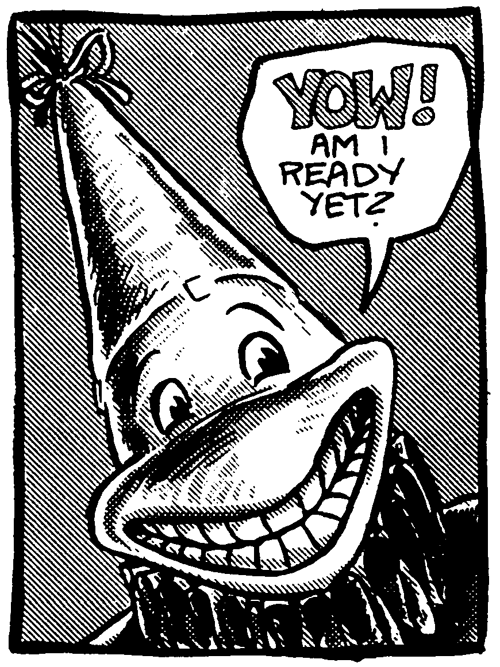
[2] Perhaps you'd prefer Crazy Clownin' Mike?
[3] Ironically, the comic actually gives Crazy Clownin' Mike precedent.